Boiler Repair in Clinton Hill, Brooklyn
When temperatures plunge across Brooklyn, maintaining dependable heating in your brownstone or multi-family property is essential. NY Plumbing provides dedicated, professional boiler repair Clinton Hill Brooklyn residents and property managers rely on for rapid restoration of comfort and heating safety.
- Steam & Hydronic Hot-Water Boilers
- Low-Water Cutoffs & Safety Valves
- Burner Ignition & Pressure Control
- Serving Clinton Hill & Nearby Areas
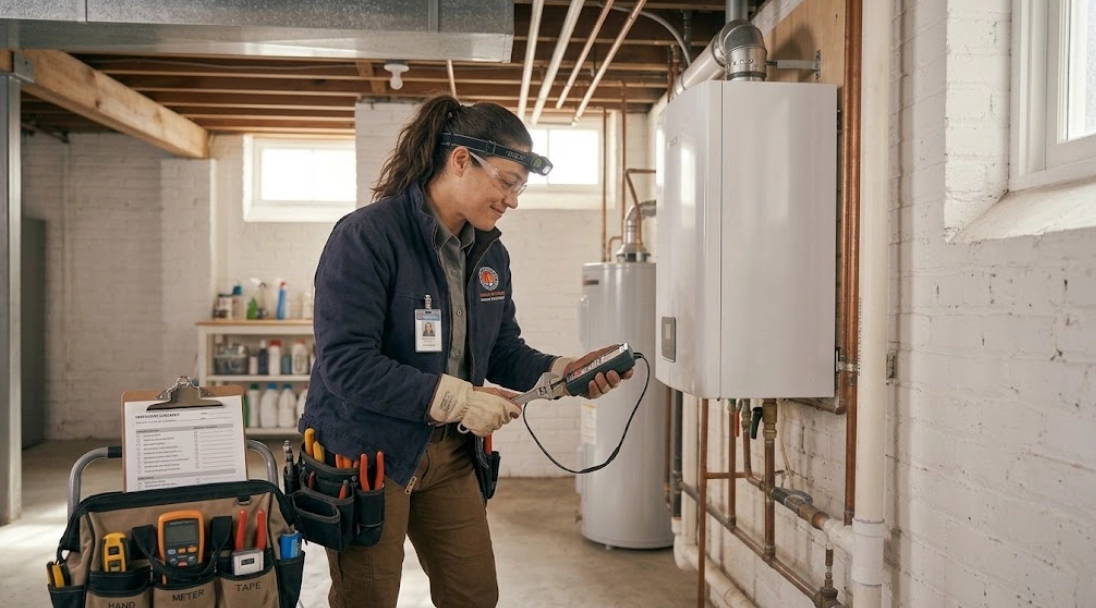
Steam and Hot-Water Boiler Problems We Diagnose
Heating systems in Clinton Hill properties range from vintage single-pipe low-pressure steam boilers to modern high-efficiency hydronic loops. Our diagnostic process identifies the mechanical failure quickly, avoiding guesswork and restoring reliable heat.
Burner Ignition & Pilot Failure
When a gas valve fails to modulate, a spark igniter becomes fouled, or the safety thermocouple fails to detect a standing pilot flame, the burner locks out. We service intermittent pilot ignitions, hot surface igniters, and safety gas valves.
Low-Water Cutoff Shutdowns
Float-type and probe-style low-water cutoffs protect cast-iron vessels from dry-firing. Sediment build-up in the float chamber or corroded probe sensors trigger automatic emergency shutdowns even when water levels appear normal.
Pressure Irregularities & Relief Leaks
Pressure relief valves discharging water or steam indicate dangerous over-pressurization. We test expansion tanks, Pressuretrol switches, and aquastats to restore balanced operating pressure within NYC safety thresholds.
Circulator Pump & Relay Faults
In hot-water hydronic systems, failing cartridge circulator pumps, seized impellers, or burned-out switching relays prevent thermal energy from reaching room radiators, leaving rooms cold despite a firing burner.
Sight Glass & Water Feeder Leaks
Cloudy, leaking, or cracked gauge glasses prevent accurate visual assessment of water level. Automatic water feeders that cycle constantly can flood the steam header, causing water hammer and inefficient boiler operation.
Frequent Cycling & Lockouts
Short-cycling—where the burner kicks on and off within minutes—strains gas valves and wastes energy. This often results from an improperly calibrated high-limit aquastat, dirty flame rods, or flue draft restrictions.
Why Older Clinton Hill Buildings Experience Boiler Failures
Clinton Hill is home to some of Kings County’s most cherished architectural landmarks, featuring 19th-century Italianate and Romanesque Revival brownstones, historic brick row houses, converted carriage houses, and pre-war multi-family apartment buildings. While these masonry structures offer exceptional aesthetic character and structural durability, their heating infrastructures present unique challenges.
Many of these historic properties operate on original single-pipe steam heating systems. Over decades of service, mineral-rich city water leaves scale inside boiler sections, steam mains shift pitch slightly as foundations settle, and sediment accumulates in horizontal wet returns. When winter heating demand intensifies, older systems face substantial thermal strain. For dedicated steam boiler repair Clinton Hill Brooklyn property owners require specialized knowledge of steam pressure dynamics and balance.
Additionally, multi-family conversions along avenues like Clinton Avenue, Washington Avenue, and St. James Place often feature expanded radiator networks tied into original boiler headers. When modifications do not match radiation load (Equivalent Direct Radiation), boilers experience chronic short-cycling, unvented air pockets, and uneven heat distribution across upper-floor units.
Heating System Diversity Across Properties
Plumbing and mechanical heating configurations vary substantially from one Clinton Hill property to another. Rather than making assumptions based on building age, our technicians conduct meticulous on-site evaluations of the boiler vessel, piping layout, venting, and controls before making recommendations.
Warning Signs Your Boiler Requires Immediate Inspection
Recognizing the early symptoms of boiler malfunction allows property owners to resolve mechanical wear before complete loss of heat occurs during a freeze. If you notice any of the following warning signs, contact our team to schedule an inspection:
-
1
Radiators Remaining Stone Cold
If the boiler is firing in the basement but radiators remain cold throughout your apartment or upper floors, blocked air vents, closed balancing valves, or airbound hydronic loops are preventing heat transfer.
-
2
Violent Banging or Pipe Knocking (Water Hammer)
Loud clanging in steam risers indicates trapped condensate colliding with high-velocity steam. This commonly stems from flooded boiler headers, sagging return lines, or malfunctioning steam traps. Learn more about our specialized steam heat and radiator repair solutions.
-
3
Puddles or Active Leaking Around the Base
Water pooling around the boiler jacket can signal a blown pressure relief valve, leaking circulator flanges, deteriorated pipe nipples, or internal cast-iron section fracture. Leaks should always be inspected immediately.
-
4
Yellow Burner Flames or Excessive Soot
Natural gas burners must burn with a crisp, steady blue flame. A yellow, lazy flame or black soot accumulation around the draft hood indicates incomplete combustion and hazardous carbon monoxide risk.
-
5
Repeated Automatic Safety Lockouts
If your boiler requires frequent manual resets on the primary control or low-water cutoff, an underlying safety hazard is tripping the equipment. Repeated resetting without diagnosis can cause severe burner damage.
What Happens During a Boiler Repair Visit
When you contact NY Plumbing for heating diagnosis, we follow a methodical troubleshooting protocol designed to locate the root failure and ensure full compliance with NYC Department of Buildings safety codes:
Intake and Operational History Review
We review the symptoms you report over the phone, noting equipment brand, heating medium (steam or hot water), recent maintenance, and error codes displayed on modern electronic ignition controls.
Combustion and Burner Inspection
On-site, we inspect the burner manifold, flame sensor, pilot assembly, and gas valve pressure. We evaluate flame characteristics and draft chimney performance to ensure safe venting of combustion byproducts.
Safety Interlock and Control Testing
We test critical mechanical safety devices, including the low-water cutoff (flushing sediment from the float chamber), the pressure relief valve, aquastats, and the Pressuretrol gauge. We verify that safety interlocks shut down the burner reliably under fault conditions.
Piping, Flange, and Valve Assessment
We examine the boiler supply headers, Hartford loop, return piping, circulator pumps, and zone valves for signs of weeping joints, electrolytic corrosion, or pressure degradation.
Transparent Explanation of Repair Options
Once diagnosis is complete, our technician explains the issue clearly, outlining the necessary component repairs, replacement parts, or adjustments required to safely bring your heating system back online.
Repair or Replace: Understanding Your Options
When dealing with a malfunctioning heating system, deciding between component repair and complete boiler replacement requires balancing equipment age, structural integrity, and long-term operating costs:
When Repair Makes Sense: If the cast-iron heat exchanger vessel is intact, free of cracks, and shows no chronic structural corrosion, repairing modular parts—such as replacing an automatic water feeder, Pressuretrol switch, gas valve, thermocouple, or circulator pump—is the most practical and cost-effective approach. Most quality boilers built by reputable manufacturers can operate dependably for decades when properly serviced.
When Replacement is Advisable: If your boiler has exceeded 20 to 25 years of continuous service, exhibits cracked heat exchanger sections leaking directly into the combustion chamber, or requires repeated emergency repairs every winter, replacement should be evaluated. Modern high-efficiency steam and hydronic boilers provide superior draft control, reduced fuel consumption, and full compliance with NYC clean air standards. To learn about sizing, venting, and permitting, review our comprehensive boiler replacement in Clinton Hill guide.
When a Boiler Problem Needs Urgent Attention & Safety Protocol
Certain heating emergencies carry severe health and safety risks. Property owners and tenants must observe strict safety protocols under hazardous conditions:
Gas Leaks & Odors — Immediate Evacuation Required
If you detect the sulfurous, rotten-egg odor of natural gas near your boiler or anywhere in your building, do not operate light switches, do not ignite flames, do not open electrical panels, and do not remain indoors to place a phone call. Evacuate all occupants outside immediately and call 911 or the National Grid Emergency Hotline at 1-718-643-4050 from a safe location.
Carbon Monoxide Hazards
Carbon monoxide (CO) is an odorless, invisible byproduct of incomplete fuel combustion. If your carbon monoxide alarms sound or occupants experience unexplained headaches, dizziness, or nausea, evacuate into fresh air immediately and call 911. Never bypass a draft hood spill switch or operate a boiler with blocked chimney venting.
Water Near Electrical Components
If a burst boiler section or blown relief valve floods the basement floor, never walk through standing water near the boiler, electrical disconnects, or circulator wiring. Disconnect power from the main circuit breaker if safely accessible from a dry area, or contact utility professionals.
Related Heating and Mechanical Plumbing Services
Heating reliability depends on the health of your entire mechanical infrastructure—from gas supply mains and water heaters to drainage loops and radiator valves.
Boiler Replacement
Comprehensive heating equipment modernization, accurate EDR radiation load sizing, steam header re-piping, and NYC Department of Buildings permit coordination.
Learn About Replacement →Steam Heat & Radiator Repair
Resolving uneven heating, noisy water hammer banging, leaking radiator shutoff valves, and failed steam air vents across brownstones and pre-war apartments.
Explore Radiator Repair →Water Heater Repair
Expert diagnosis for gas, electric, and tankless units as well as indirect hot-water storage tanks connected directly to residential hydronic heating boilers.
Water Heater Services →Gas Line Repair & Inspection
Code-compliant gas piping repair, manifold pressure testing, appliance hookups, and NYC Local Law 152 periodic gas piping inspection compliance.
Gas Line Inspection →Leak Detection
Non-destructive electronic acoustic and thermal imaging leak detection to pinpoint hidden pipe fractures behind plaster walls, ceilings, and risers.
Leak Detection Details →Drain Cleaning
Electromechanical snaking and heavy-duty grease clearance for kitchen stacks, bathroom fixtures, and aging cast-iron branch lines in older properties.
View Drain Cleaning →Sewer Line Repair
High-definition fiber-optic camera inspection, root intrusion removal, and structural trenchless or spot repair for main building sewer laterals.
Sewer Repair Options →Serving Clinton Hill and Neighboring Brooklyn Communities
Our heating technicians operate centrally in Clinton Hill, serving residential and commercial properties situated between Flushing Avenue, Classon Avenue, Atlantic Avenue, and Vanderbilt Avenue. Whether your property is an historic brownstone near Pratt Institute, a converted carriage house off Myrtle Avenue, or a multi-family walk-up along Washington Avenue, we provide responsive phone dispatch.
In addition to our primary focus on Clinton Hill, we provide heating and mechanical plumbing service to adjoining neighborhoods throughout Kings County, including historic row homes in Fort Greene, brownstones across Bedford-Stuyvesant, pre-war buildings in Prospect Heights, and converted industrial lofts in Williamsburg. For complete details on our coverage scope, review our Clinton Hill boiler service areas directory.
Whether you require scheduled annual maintenance on a gas boiler repair Clinton Hill Brooklyn system or immediate diagnostic assistance for a hot water boiler repair Clinton Hill Brooklyn residential loop, our team is ready to assist.
Frequently Asked Questions About Boiler Repair
Why is my boiler not producing heat?
A complete loss of heat typically stems from an interrupted gas supply, a tripped electronic ignition module, a defective thermocouple or flame sensor, a malfunctioning low-water cutoff that shuts down the burner for safety, or an open circulator relay on hydronic heating loops. If your boiler not working Clinton Hill Brooklyn property requires immediate attention, calling a qualified professional is the quickest way to diagnose the fault.
What is the difference between a steam boiler and a hot-water boiler?
A steam boiler boils water inside a cast-iron vessel to generate steam pressure (typically 0.5 to 2 PSI), which travels up supply risers to cast-iron radiators that vent air. A hydronic hot-water boiler circulates heated water under continuous system pressure (12 to 15 PSI) through closed piping loops using an electric circulator pump.
When should I repair or replace my boiler?
Boiler repair is ideal when the heat exchanger vessel is intact and the malfunction involves serviceable modular components such as zone valves, relief valves, gas valves, or low-water cutoffs. Boiler replacement is recommended when cast-iron sections are cracked, internal corrosion causes chronic water leakage, or the system has exceeded its operational lifespan.
What should I do if my boiler is leaking water?
First, verify whether water is discharging from the pressure relief valve, pipe joints, circulator flanges, or the cast-iron heat exchanger itself. Never touch standing water near electrical components. Shut off the emergency power switch if safe to do so, and call our dispatch team at (315) 202-8009.
What information should I have ready when calling for boiler service?
Having the heating system type (steam or hydronic hot water), fuel source (natural gas), approximate equipment age, boiler manufacturer (such as Burnham, Weil-McLain, or Utica), and specific error codes or symptom details will assist our technicians in preparing appropriate diagnostic tools.