Steam Heat & Radiator Repair in Clinton Hill, Brooklyn
When clanging pipes, hissing vents, or stone-cold radiators disrupt your comfort during a Brooklyn winter, specialized radiator repair Clinton Hill Brooklyn residents depend on restores quiet, balanced heat across every room.
- Eliminate violent water hammer & pipe knocking
- Brass shutoff valve packing & replacement
- Thermostatic air vent balancing across floors
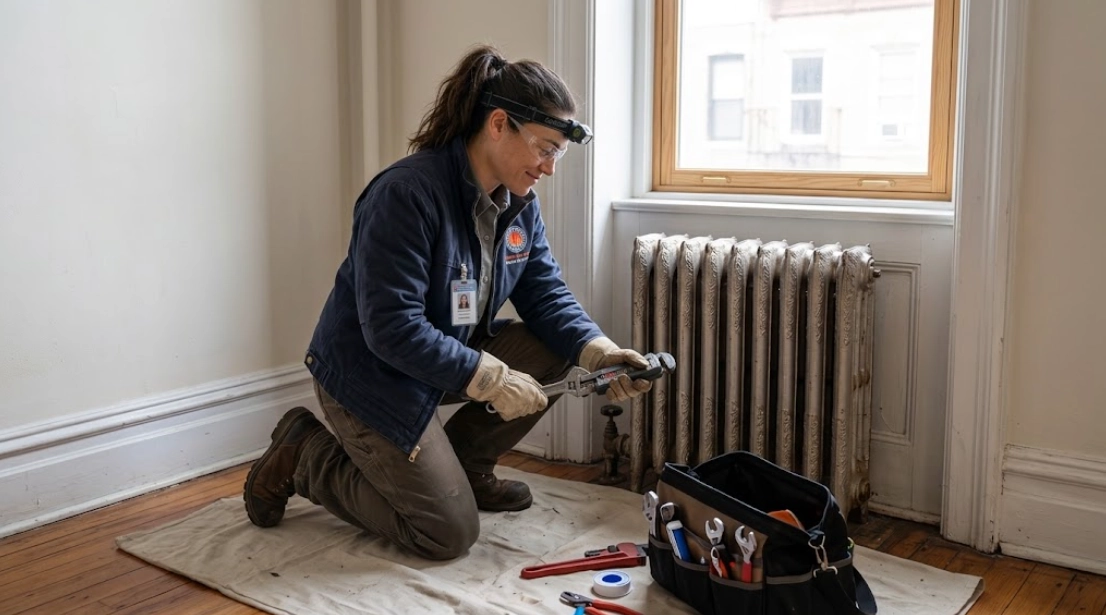
Common Steam Radiator Symptoms in Clinton Hill Brownstones
In historic Clinton Hill residences along Washington Avenue, St. James Place, and Clinton Avenue, classic cast-iron radiators remain the primary heat emitters. These systems rely on delicate pressure balances. When mechanical components wear down, heating distribution suffers:
Cold Radiators While Others Overheat
Steam cannot enter a radiator until cold air escapes. If the radiator air vent is clogged with mineral scale or paint, air remains trapped inside, preventing steam from entering. Installing calibrated air vents balances steam distribution between parlor-floor units and top-floor bedrooms.
Banging Pipes and Violent Knocking (Water Hammer)
Severe banging steam pipes Clinton Hill Brooklyn properties experience are not just an annoyance—they signal high-pressure mechanical shock. In a single-pipe steam system, steam and returning condensate share the same pipe. If the horizontal run sags, or if the radiator is pitched away from the supply valve, water pools in the bottom of the cast-iron sections. Fast-moving steam collides with standing water, violently slamming pipe walls. Correcting radiator pitch with dense hardwood shims and leveling the supply branch eliminates water hammer.
Leaking Brass Radiator Valves
Deteriorated graphite packing around the valve stem causes steam and water to seep onto hardwood flooring, damaging ceilings below. Our technicians provide professional steam radiator valve replacement Clinton Hill Brooklyn building owners count on to protect structural woodwork.
Single-Pipe vs. Two-Pipe Steam Heating
Clinton Hill properties feature both single-pipe and two-pipe steam systems. In single-pipe systems, steam enters and condensate leaves through the same valve. In two-pipe systems, steam enters at the top and condensate exits through a steam trap into a return pipe. A technician must verify the specific system layout to troubleshoot correctly.
Realistic Step-by-Step Diagnostic & Service Workflow
-
1
System Assessment & Boiler Coordination
We verify boiler operating pressure in the basement. Excessive pressure (above 2 PSI) prevents steam vents from opening and causes rapid radiator flooding. For boiler pressure control adjustments, explore our boiler repair in Clinton Hill services.
-
2
Vent Calibration & Valve Testing
We test individual radiator vents to identify seized thermostatic floats, clear vent ports, or upgrade to properly sized vents matched to room distance from the main supply riser.
-
3
Pitch & Run Alignment
We inspect horizontal piping under floorboards and check that the radiator slopes downward toward the valve at a minimum pitch of 1 inch per 10 feet of length.
-
4
Valve Packing & Spud Replacement
We rebuild leaking valve stems with PTFE graphite packing or replace obsolete brass spuds connecting the radiator to the riser.
Safety Precautions Around Steam Heating
Steam heating operates at temperatures exceeding 212°F. Never attempt to remove an air vent or unscrew a valve while the boiler is running. Discharging steam can cause severe burns. Property owners should avoid forcing seized valve handles, which can snap brittle cast-iron spuds. If aging equipment warrants complete boiler upgrade, consult our boiler replacement guide.
Frequently Asked Questions About Radiator Repair
Why is my steam radiator making loud banging noises?
Banging pipes—known as water hammer—occur when steam collides with accumulated condensate trapped in the radiator or supply line. In single-pipe steam systems, this is typically caused by a closed or partially throttled supply valve, a sagging horizontal pipe, or a radiator pitched away from its drain.
Why is my radiator hissing or spitting brown water onto the floor?
A spitting radiator vent indicates that the internal bi-metallic or thermostatic float inside the air vent has failed, or excessive boiler water surges have flooded the heating main. Replacing the failed vent and checking boiler operating pressure solves the issue.
Can I regulate heat by turning the steam radiator shutoff valve partially off?
No. On a single-pipe steam system, the radiator shutoff valve must be either fully open or completely closed. Throttling the valve halfway traps returning water, leading to severe clanging, water hammer, and radiator leaks.
What is the difference between steam and hot-water radiators?
Steam radiators have an air vent on the side that expels air as steam enters under low pressure. Hot-water radiators are completely filled with pressurized water circulating through closed loops, featuring small manual air bleeders rather than automatic steam vents.
To learn about regional coverage, explore our Clinton Hill service areas or reach out through our contact page.